In brief
- DTCC affirmed its vision for tokenized securities is interoperable.
- DTCC’s Nadine Chakar underscored risk and costs as factors.
- The company plans to issue tokens first on Canton Network.
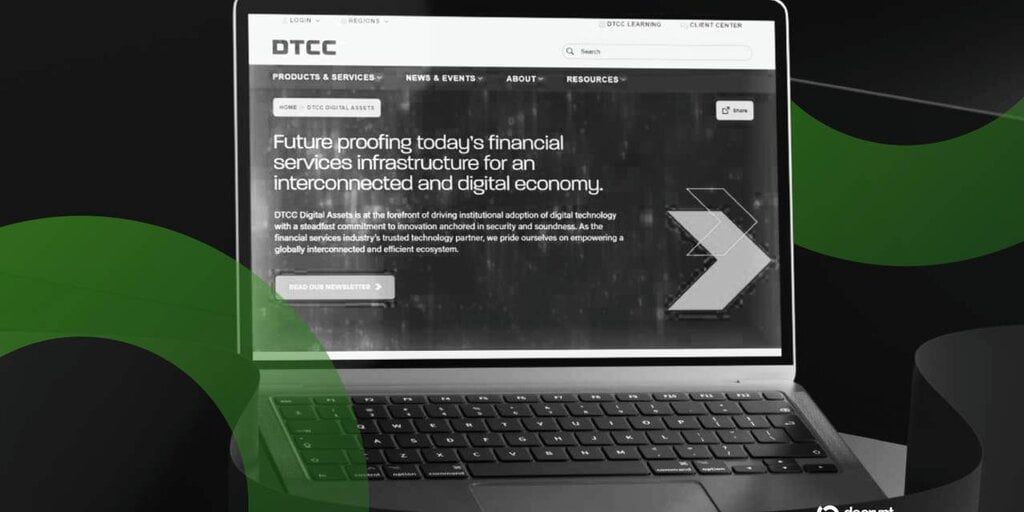
The Depository Trust & Clearing Corporation’s vision for tokenized securities isn’t tethered to any single network, even if it’s admittedly rooted in the past.
The firm that processes roughly $10 trillion of securities transactions every day is keeping an open mind as it fleshes out its tokenized securities offering, but risk and data standards remain paramount, according to Global Head of DTCC Digital Assets Nadine Chakar.
During a virtual forum on Thursday, the Wall Street veteran said that DTCC values the concept of interoperability, and it’s not in the business of creating an environment where digital assets can’t flow seamlessly between blockchains due to technical limitations.
“We’re not building walled gardens,” Chakar said. “Interoperability, for me, is being able to move things seamlessly from one chain to another, without risk [or] extra expenses.”
Chakar added that messaging standards facilitating communication within the traditional financial system may eventually become a “relic of the past, but they will serve us well as we move forward into a world [where], every single day, you’ve got somebody launching a new L1.”
DTCC is committed to working with the industry on interoperability, Chakar affirmed, but her comments reflect the cautious nature of steps the incumbent is taking as it enters a space where North Korea has stolen billions of dollars through advanced cyberattacks.
Last month, DTCC signaled that it would first issue tokenized securities on Canton Network, a permissioned blockchain designed for financial institutions. Unlike networks that are purely transparent, user access to individual applications can be controlled. What’s more, the ability to validate transactions on the network is currently an invite-only process.
In some corners, DTCC’s vision for tokenized securities has generated controversy because the digital assets that it plans to issue aren’t “native.” Although some players in tokenization feel that securities should be issued directly on a blockchain to maximize efficiencies, DTCC plans to create tokens that are tied to existing securities it already safeguards.
In addition to Canton, DTCC plans to offer tokenized securities on “AppChain,” a permissioned, Ethereum-compatible network for applications that’s built on open-source technology.
“What DTCC is building in tokenized securities is intrinsically and inescapably a ‘walled garden,’ because all ‘tokenized securities’ are simply claims on DTCC’s claims on the actual securities,” crypto lawyer and MetaLeX founder Gabe Shapiro told Decrypt.
With the legal title to 83% of all publicly traded stock in the U.S. held by DTCC affiliate Cede & Co., Shapiro added, “You don’t own the stock that is ‘tokenized’—Cede and DTCC do.”
The sentiment may blister among crypto-natives, but Roger Bayston, head of digital assets at asset manager Franklin Templeton, which pioneered tokenized money market funds, recently told Decrypt that the “securities business is by construct permissioned.”
During the virtual forum, Brian Steele, managing director and president of clearing and securities services at DTCC, explained why the firm considered Canton first. He cited demand from clients for after-hours financing to support transactions for market makers and liquidity.
Steele said it’s likely that each blockchain will have its own unique characteristics and ecosystem to make it fit-for-purpose, but DTCC will use evaluation criteria for future expansions including resiliency and security, while also factoring in client demand.
“We want our clients to have a choice,” he said. “We are committed to connecting to multiple blockchains, assuming they meet the parameters of what I’ll call doing business with DTCC.”
Daily Debrief Newsletter
Start every day with the top news stories right now, plus original features, a podcast, videos and more.