Bitcoin (BTC) risked wiping out its Iran truce gains and returning toward the $60,000 psychological support as the Bank of Japan (BoJ) raised its interest rates to their highest level in thirty years.
Key takeaways:
- BTC has averaged a 5.74% decline in the 30 days after the last four BoJ rate hikes.
- A repeat of previous post-hike drawdowns puts Bitcoin’s downside range between $62,700 and $56,700.
Previous BOJ hikes warn of 30-day Bitcoin losses
On Tuesday, the BoJ raised its short-term policy rate by 25 basis points to 1.0% on June 16, marking Japan’s highest interest-rate level since 1995.
The move came as policymakers responded to persistent inflation risks from higher energy costs and lingering Middle East supply disruptions.
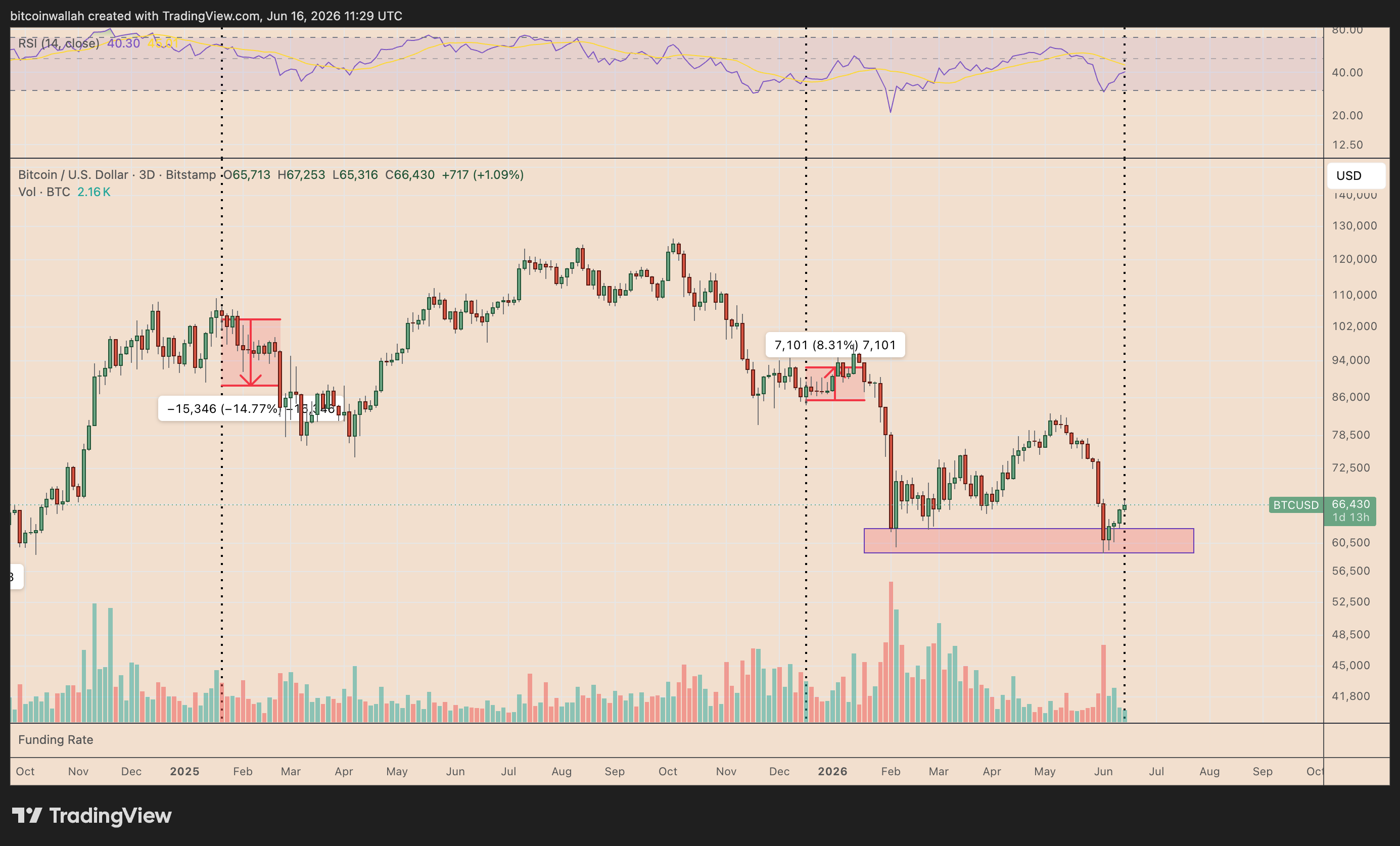
Bitcoin dropped by nearly 2.5% from its local high at $67,250 — but was maintaining its June gains. Its historical performance after BoJ rate hikes, however, points to downside risks.
In the 30 days after the last four BOJ hikes, Bitcoin averaged a 5.74% decline. BTC fell 5.59% after the March 2024 hike, 10.89% after the July 2024 hike, and 14.77% after the January 2025 hike.
BTC/USD three-day chart. Source: TradingView
The only positive case came after the December 2025 hike, when BTC gained 8.31% over the following 30 days. However, that rebound followed Bitcoin’s sharp correction from its October 2025 peak, suggesting the market was already deeply oversold before the BoJ decision.
Applying Bitcoin’s average 5.74% post-BoJ decline to its current price near $66,500 puts the downside target near $62,700, just above the $59,000–$62,000 demand zone (red area in the chart below).
BTC/USD three-day chart. Source: TradingView
A sharper pullback matching the July 2024 post-hike drop would send BTC toward $59,200, while a repeat of January 2025’s decline would imply a fall to $56,700.
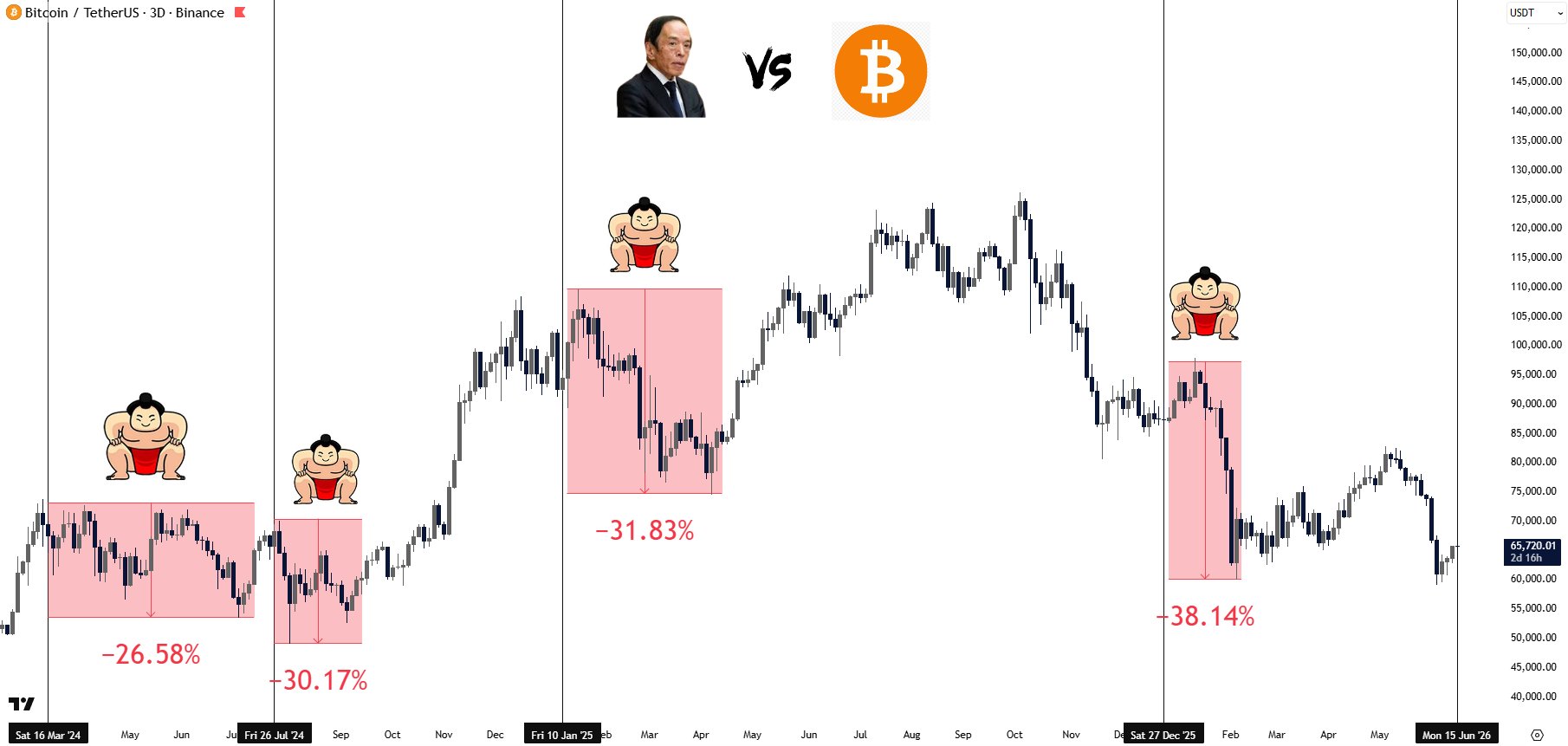
Broader post-BoJ drawdown phases have been even steeper, with Bitcoin losing between 26% and 38% after Japan’s rate decisions since March 2024, a chart shared by crypto analyst Gerla shows.
BTC/USDT three-day chart. Source: TradingView/Gerla
BOJ hikes have often arrived near US recessions
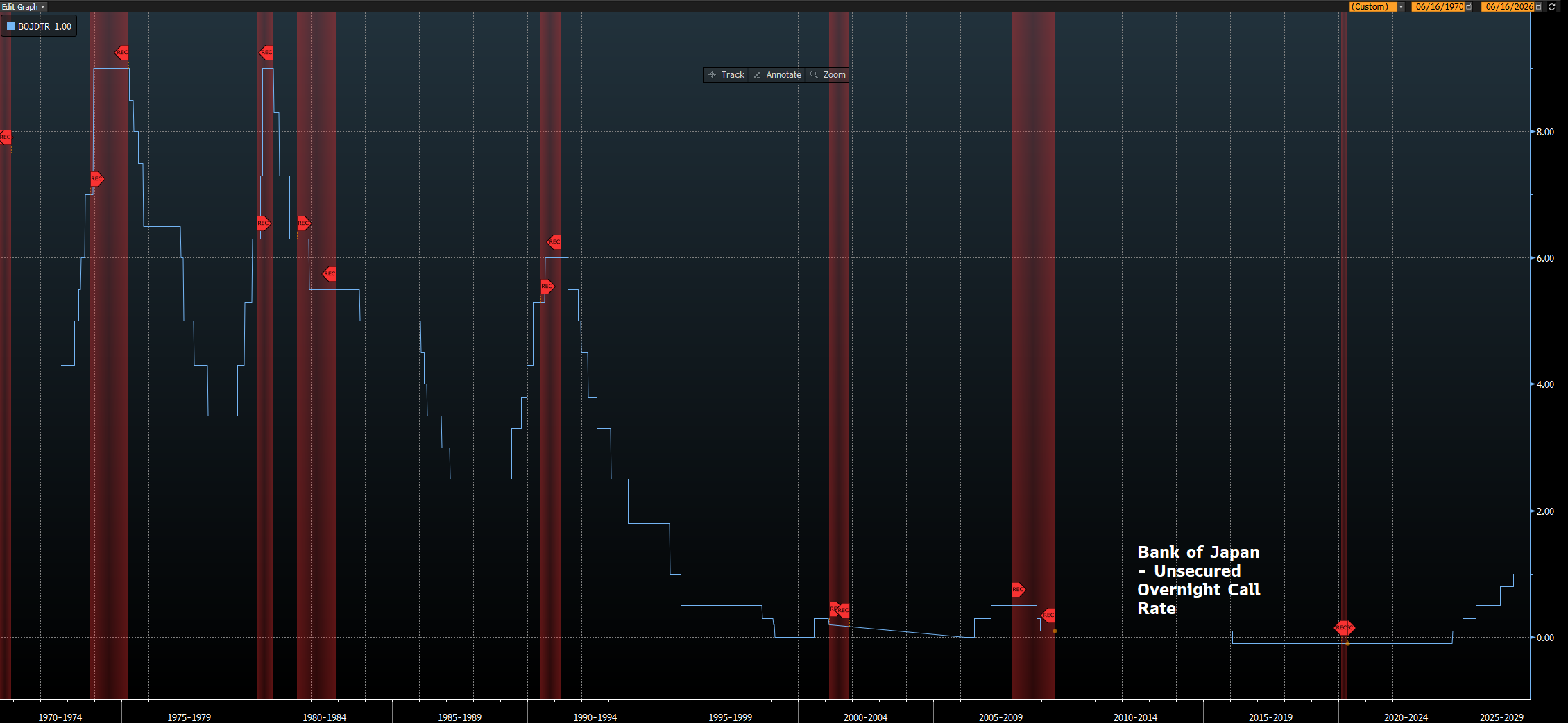
BoJ rate-hiking cycles have historically coincided with US recessions, with the COVID shock being the main exception, noted André Dragosch, European Head of Research at Bitwise, in a Tuesday post.
BoJ’s unsecured overnight call rate vs US recession periods. Source: Bloomberg Terminal/André Dragosch
The pattern suggests the BoJ often tightens policy late in the global cycle, when inflation pressure is already high, and liquidity conditions are becoming less supportive for risk assets.
Japan has been a key source of cheap money for global markets for years.
When Japanese rates were near zero, traders could borrow yen at low cost and use that money to buy riskier assets elsewhere, including stocks and crypto. But as Japan raises rates, that trade typically becomes less attractive.
Related: Bitcoin recovery rests on US-Iran deal as momentum remains weak
Some traders may then cut their borrowed positions to reduce risk. That can hurt assets like Bitcoin, which often falls harder when global investors become more cautious.